

Available now
The full carrier TMS, on one record
Dispatch, scheduling, driver management, billing, and reporting all run from one operating record. Best-in-class intermodal tracking is built in. Your desk, your drivers, and your invoices stop living in three disconnected tools.
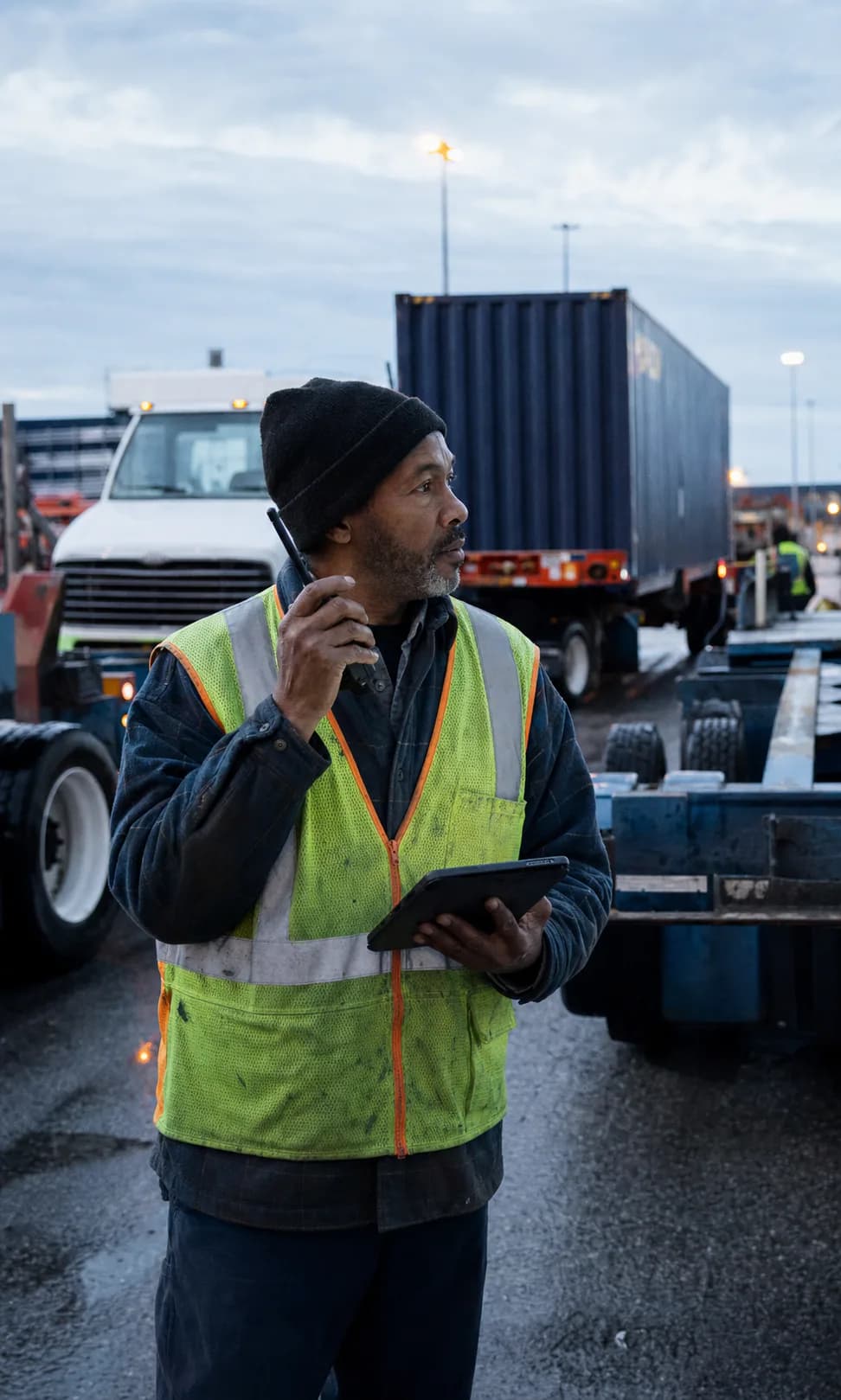
Why it matters
The full carrier TMS, on one record.
Most drayage runs on a whiteboard for dispatch, a drawer for compliance, a separate tool for billing, and a dozen terminal logins for status. The move changes in one place, gets explained in another, and the invoice is rebuilt from memory days later.
Conterminal is a transportation management system that models the move the way it actually happens. A job breaks into legs — pickup, delivery, return, transfer — and each leg into segments. The board reflects real work, not a row in a spreadsheet. Coordination modes are first-class: single, double-move, and street-turn. Cutting one empty mile is the difference between a profitable load and a break-even one.
Dispatch, scheduling, billing, and reporting share one record. The invoice bills from the move that actually ran, and the numbers reconcile without re-keying. The operational TMS and the best-in-class tracking are one system, not two you fight to keep in sync.
How it works
From signal to action.
- 01
Model the move
A job is the customer's ask. It breaks into legs — pickup, delivery, return, transfer — and each leg into segments. The board mirrors the real move instead of flattening it into one line.
- 02
Schedule and coordinate
Book delivery appointments and assign each move as a single, a double-move, or a street-turn. A returned empty (MT) turns straight into the next pickup instead of running the truck back light.
- 03
Dispatch into the live record
Change a leg and the shared dispatch record updates. The next person sees the move before the phone rings, and tracking status stays attached to every container.
- 04
Bill and report from the same move
Invoices and driver settlement build from the dispatched legs, and reporting reads the same record. One source, no double entry between operations and accounting.
What's inside
The details that carry the weight.
Shift-based dispatch workbench
A working desk built for the shift, not a static list. It holds the day's moves the way a dispatcher works them and keeps the board current as the work changes.
Job → leg → segment model
Every move decomposes the way it really runs. A job splits into legs — pickup, delivery, return, transfer — and each leg into segments. Nothing about the move hides inside a single row.
Coordination modes
Single, double-move, and street-turn are first-class dispatch decisions. Chain a return into a pickup to strip empty miles out of the day.
Scheduling & appointments
Delivery appointments are booked on the same board the move runs on. The dock window and the dispatch plan never drift apart.
Billing, settlement & reporting
Invoices and owner-operator settlement build from the dispatched move, and reporting reads the same record. The operations side and the accounting side finally agree.
Operational safeguards
Built into the workflow.
- 01
Born inside a working drayage carrier, now one tenant on the platform. The dispatch model comes from a desk that runs real moves, not an abstraction.
- 02
The move is modeled as it happens: jobs break into legs (pickup, delivery, return, transfer) and legs into segments, with single, double-move, and street-turn coordination to cut empty miles.
- 03
Dispatch, scheduling, billing, and reporting read from one operating record, so the invoice matches the move that actually ran.
- 04
Best-in-class intermodal tracking is part of the same system, so container status sits beside the dispatch decision it affects.
Built for carriers and drayage fleets: the dispatchers and owner-operators who run the whole operation, from the move to the invoice, on one system.
Questions
Good to know.
Is this a full TMS, or just dispatch?
A full transportation management system for drayage: dispatch, driver management, scheduling, billing, and reporting, with best-in-class intermodal tracking built in. It's the operating record for the whole operation, not a single screen.
What is a leg, and why break a job into them?
A job is the customer's ask. It breaks into legs — pickup, delivery, return, transfer — and each leg into segments. Modeling the move this way lets the board reflect real work: which container is where, what's still owed, and what a driver can actually take next.
How does billing stay accurate?
Invoices and driver settlement build from the dispatched legs, so the bill matches the move that actually ran instead of being rebuilt from memory. Reporting reads the same record.
See it live
See Dispatch, Scheduling & Billing on your own freight.
Bring a handful of container numbers and we'll show you this capability working on your real operation.