

Use case · Freight forwarders
A forwarded PDF becomes live container tracking
Bring in a supported container list. It becomes managed tracking across sea, rail, and road. No status rebuilt by hand.
The job today
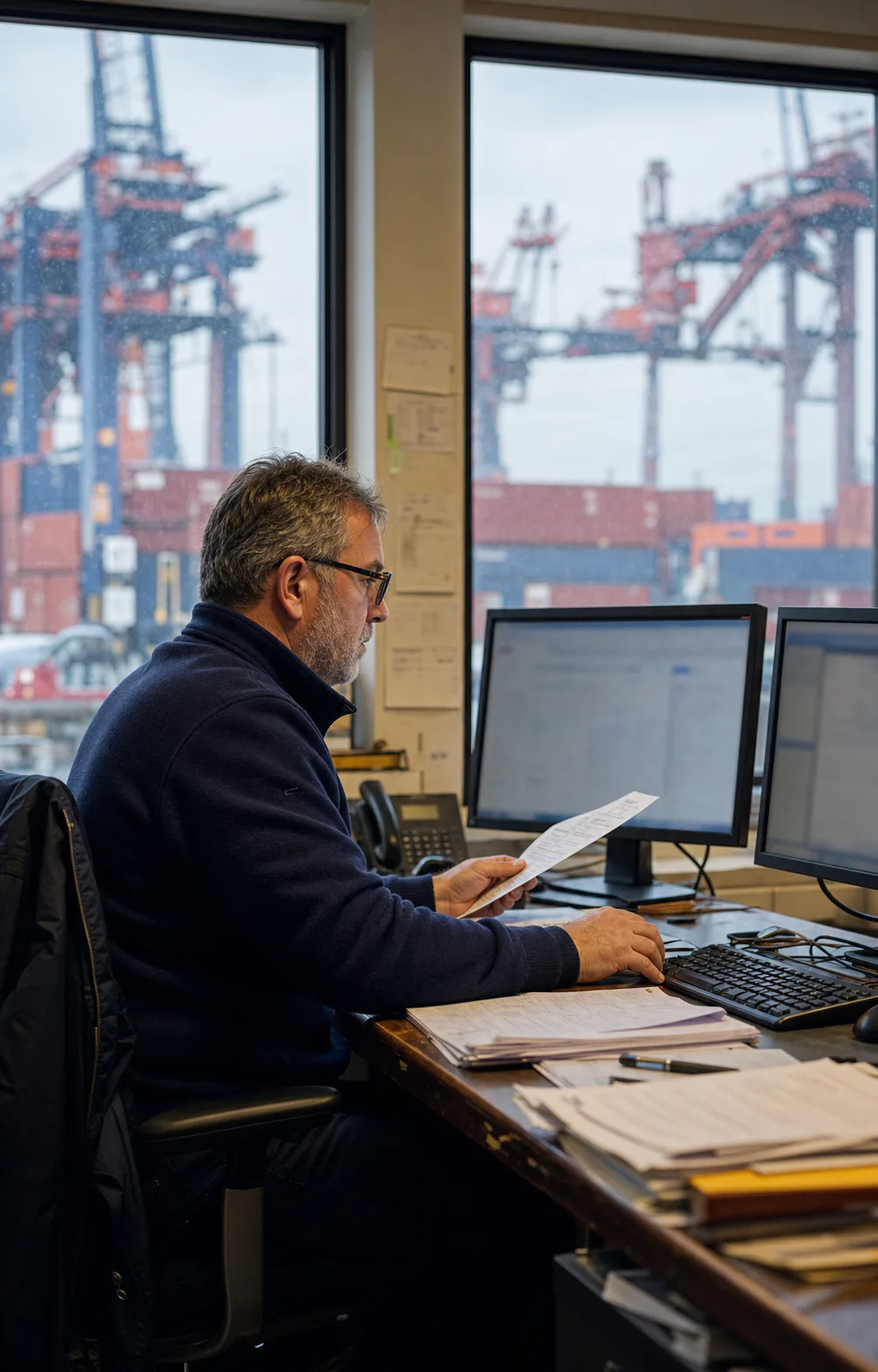
Your job is to tell the customer where their cargo is and when it lands. You don't own the trucks, the vessels, or the terminal logins. All you get is a PDF or spreadsheet of container numbers, forwarded down the chain.
So you tab-hop a dozen terminal, rail, and steamship-line (SSL) websites, copy numbers into a tracking spreadsheet, and refresh an AIS (vessel position signal) map. The update still lands after the customer's phone call.
With Conterminal
Bring in the forwarded list. Every container becomes a live managed row: vessel ETA, terminal status, cost clock. It refreshes around the clock, no logins on your side.
The update arrives before the phone call. You watch one fast, terminal-like workspace instead of a dozen browser tabs.
How it works
In practice.
- 01
Bring in the forwarded list
Pull the container numbers from the PDF or spreadsheet your customer forwarded into Conterminal. Each box becomes a managed delivery-order row: one shared record per container, no truck ownership required.
- 02
The engine takes over the logins
Around the clock, LongShorty signs into terminal, rail, and steamship-line systems and writes each managed container's status into your workspace. Current sources include terminal, rail, and ocean providers; exact coverage is confirmed for the lanes in your rollout.
- 03
Every vessel gets an ETA you can trust
Each on-water box shows a one-line verdict like 'Arrives in 12h · tomorrow 4:00 AM · PNCT.' A trust ladder reconciles conflicting arrival signals in order: carrier ETA over terminal ETA over berth schedule over raw AIS over paper docs. It demotes implausible next-voyage dates before they reach the customer update.
- 04
It feels instant
The whole working set is already in your browser. Filter the board or open a container and it's immediate, not a page reload. Live update signals push new status in place, so the record refreshes itself while you watch.
How it works in practice
Connected terminal, rail, and ocean sources write status into one managed container record. The source stays visible beside the result.
Get started
See it on your own freight.
Bring a handful of container numbers. We'll show you the arrivals, deadlines, and work Conterminal can resolve for your operation.